
What Petrol Tools Really Take From You
If you’ve been in commercial lawn care long enough, you don’t need to be told how to use a mower or a blower. You know your gear. You know your sites. And you know that aches, ringing ears and end-of-day fatigue come with the territory. Or at least, they used to.
Because when you really step back and look at it, a lot of what’s been accepted as “part of the job” has more to do with petrol than the work itself.
The Effects Of Noise Go On And On
Petrol tools are loud. Everyone knows that. What’s easy to forget is that noise damage isn’t dramatic. It builds quietly, season after season.
That constant engine scream sits right where human hearing is most sensitive. Even with protection, long exposure takes its toll. Ringing ears at night. Turning the TV up. Missing parts of conversations on site. These aren’t random signs of getting older. They’re the result of standing next to combustion engines for hours, week after week.
When noise drops, so does fatigue. Jobs feel calmer. Communication gets easier. And at the end of the day, you’re not carrying that constant buzz in your head.
Invisible Fumes With A Physical Cost
Petrol exhaust is something landscapers have tolerated for decades. But tolerating something doesn’t make it harmless.
Every time an engine fires up, it releases carbon monoxide, nitrogen oxides, and harmful particulates. You breathe it in while walking behind a mower. You cop it trimming along a fence line. You stand in it while blowing away the cuttings.
Over time, that exposure adds up. Headaches. Irritated lungs. That heavy, foggy feeling after a long day. It’s not weakness. It’s chemistry.
Removing exhaust from the equation changes how a site feels. Cleaner air. Clearer heads. Less of that lingering fatigue that hangs around well after pack-up.
Vibration Wears You Down Before You Notice
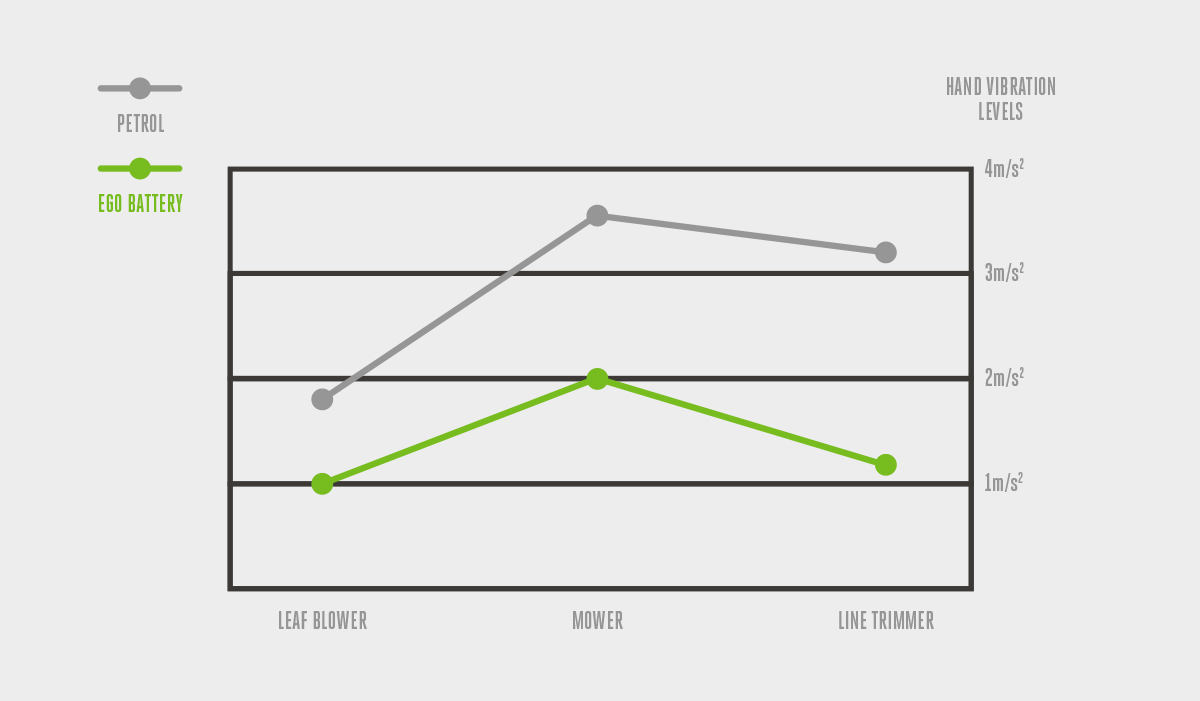
Vibration is one of the most underestimated risks in outdoor power equipment. It doesn’t announce itself like noise or smell like fumes. It just works away in your hands and arms.
Years of high vibration exposure can reduce grip strength, numb fingers and affect circulation. For professionals who rely on control and precision, that’s career-ending.
Smoother-running equipment places less strain on the body over long days. It’s the kind of difference you don’t notice straight away, but feel it over time.
Fatigue Isn’t Just About Fitness
Ask any professional, and they’ll tell you fatigue isn’t just physical. It’s mental.
Petrol tools demand attention before the work even begins. Hot starts. Pull cords. Fuel mixing. Engine quirks. Constant noise. Heat radiating through handles and housings.
All of it drains energy in the background. Battery equipment reduces that mental load. You spend less time managing the tool and more time doing the job, which makes a noticeable difference across a full day on site.
Take A Look At The Bigger Picture
Health and safety is about longevity. How your body feels at the end of the week. How sharp you are at the end of the season. How many years you can keep doing this work at a high level. Petrol tools have done the job for decades. But they’ve also taken their cut in noise, fumes, vibration and fatigue.
Today, there’s another way to work. One that delivers the performance professionals expect, without quietly working against the people behind the handles. For anyone planning to stay in the game, that’s worth paying attention to.